

CGM Journey Day12——The Relationship Between Stress and Blood Glucose
Stress is closely linked to blood glucose levels, especially in people with diabetes. Understanding this mechanism can help manage blood sugar more effectively.
I. How Stress Affects Blood Glucose
When the body or mind is under stress, it triggers the fight-or-flight response:
- Increase in stress hormones
- Cortisol and adrenaline rise.
- These hormones signal the liver to release glucose into the bloodstream to provide energy for coping with stress.
- Reduced insulin sensitivity
- Under stress, muscle and fat cells respond less effectively to insulin.
- As a result, the same amount of insulin cannot transport glucose into cells efficiently, causing blood glucose levels to rise.
- Behavioral changes
- Stress can lead to increased consumption of high-sugar/high-fat foods, reduced physical activity, and poor sleep quality.
- These behaviors further contribute to blood glucose fluctuations.
II. Effects of Acute vs. Chronic Stress on Blood Glucose
|
Type |
Mechanism |
Blood Glucose Pattern |
|
Acute Short-Term Stress |
Adrenaline surge → liver releases glucose |
Temporary rise in glucose during stress or activity, usually returns to baseline |
|
Chronic Long-Term Stress |
Persistently elevated cortisol → increased insulin resistance |
Elevated fasting glucose, higher postprandial peaks, potential rise in HbA1c |
III. How Stress Management Helps Blood Glucose
- Reduces glucose variability
- Regular relaxation, breathing exercises, or mindfulness meditation can lower cortisol levels and stabilize blood glucose.
- Improves insulin sensitivity
- Chronic stress worsens insulin resistance, whereas psychological interventions (e.g., mindfulness-based stress reduction) can improve it.
- Supports healthy lifestyle habits
- Lower stress makes it easier to maintain regular exercise, balanced diet, and good sleep, indirectly improving blood glucose control.
IV. Practical Stress Management Strategies

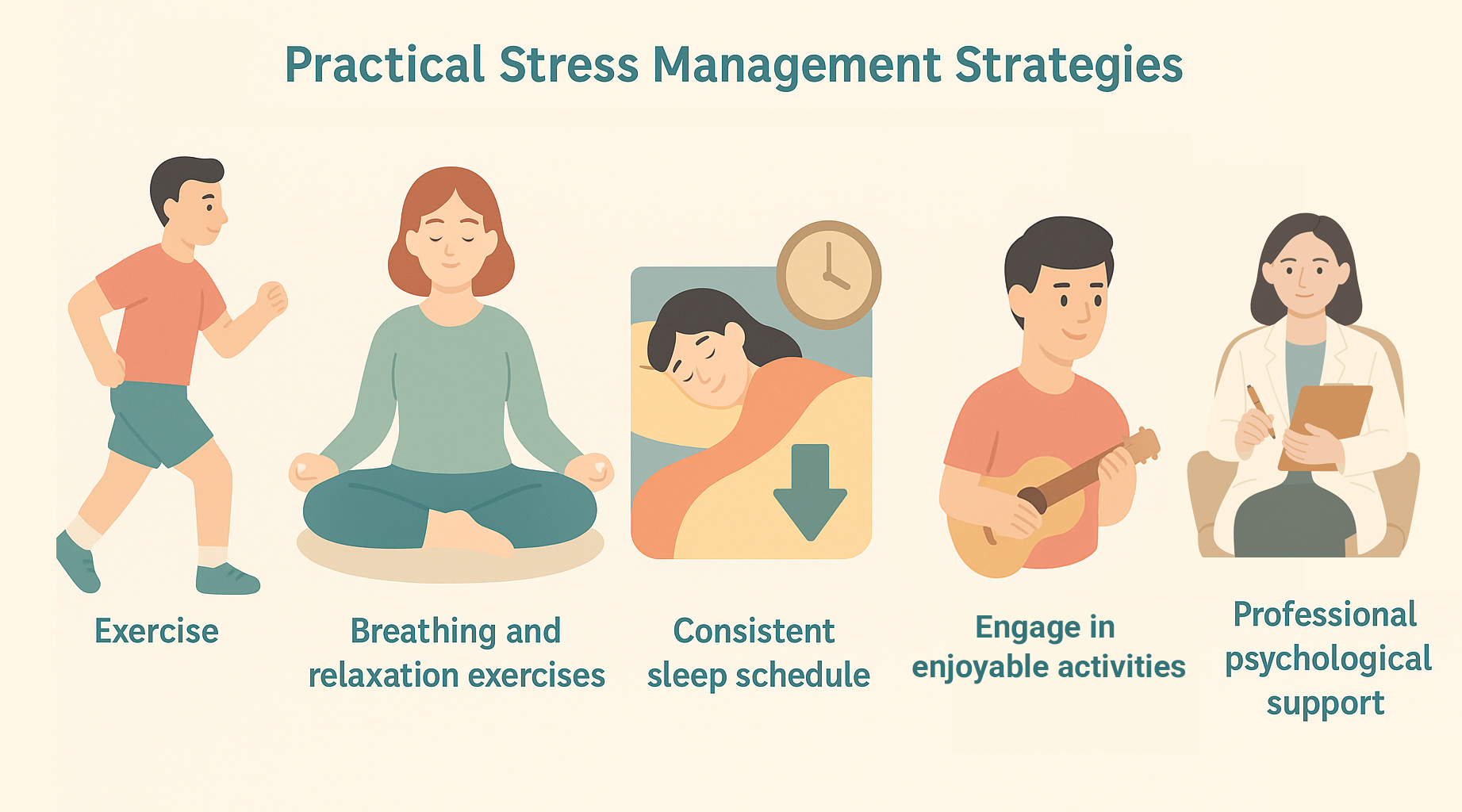
- Exercise
- Aerobic and resistance training reduce blood glucose and alleviate stress simultaneously.
- Breathing and relaxation exercises
- Diaphragmatic breathing, progressive muscle relaxation, and mindfulness meditation.
- Consistent sleep schedule
- Aim for 7–8 hours per night and avoid staying up late.
- Engage in enjoyable activities
- Music, art, reading, or social interactions.
- Professional psychological support
- Seek help from psychologists or counselors when needed.
Summary:
Stress elevates blood glucose through three main pathways: increased stress hormones, reduced insulin sensitivity, and unhealthy behaviors.
Managing stress is not only beneficial for mental health but is also critical for blood glucose control and the prevention of diabetes complications.


