

CGM Journey Day1——Meet your CGM
How Does CGM Work?
Think of CGM as a tiny “blood sugar detective” that works under your skin.
Instead of drawing blood like a finger prick, it uses a small disposable sensor:
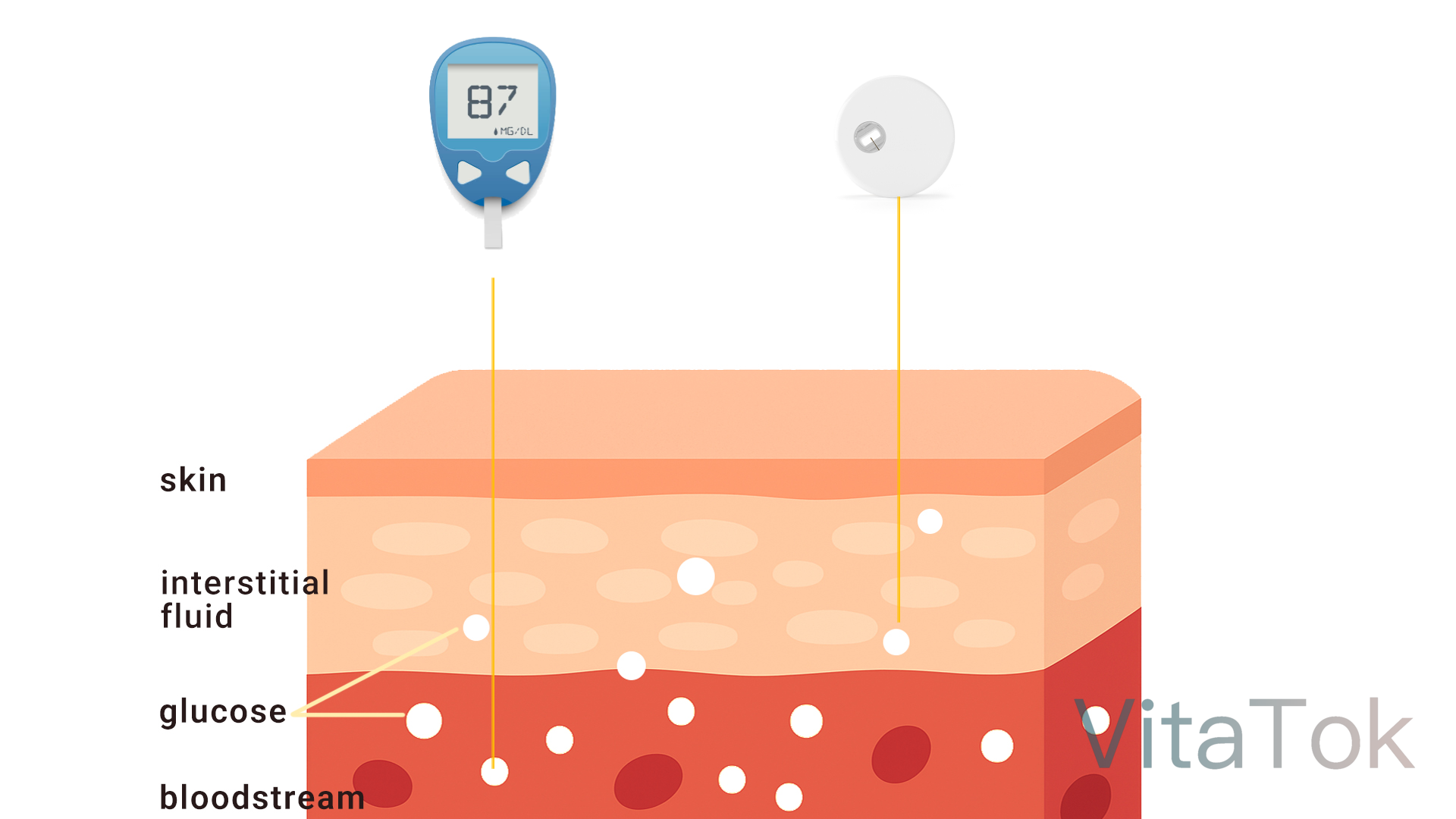

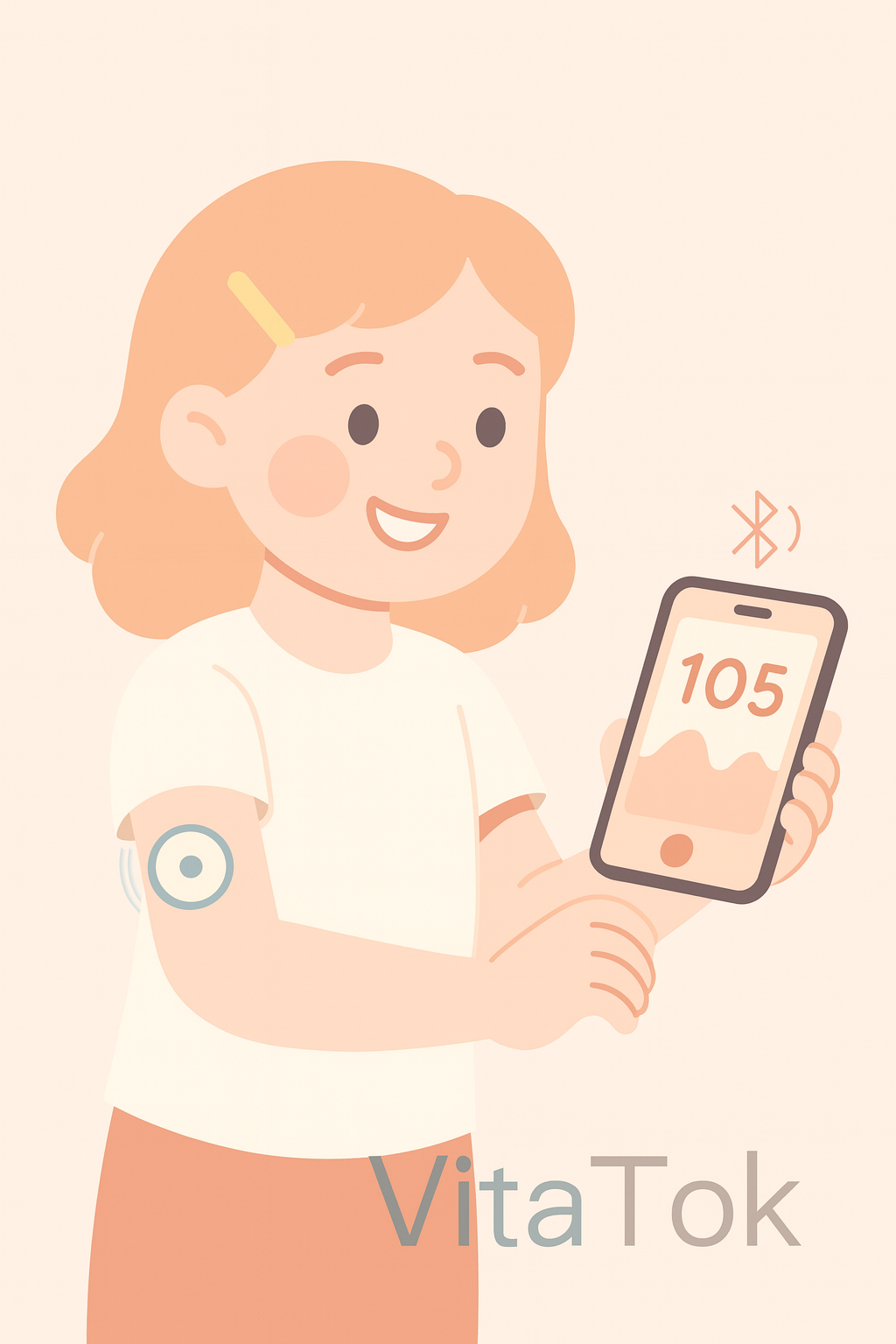
- The sensor is gently placed under the skin (usually on the arm or belly) and held in place with a sticky patch.
- It measures sugar levels in the fluid between your cells and turns that into signals.
- These signals are sent straight to an app on your phone, where you can see your real-time numbers and easy-to-read glucose curves.

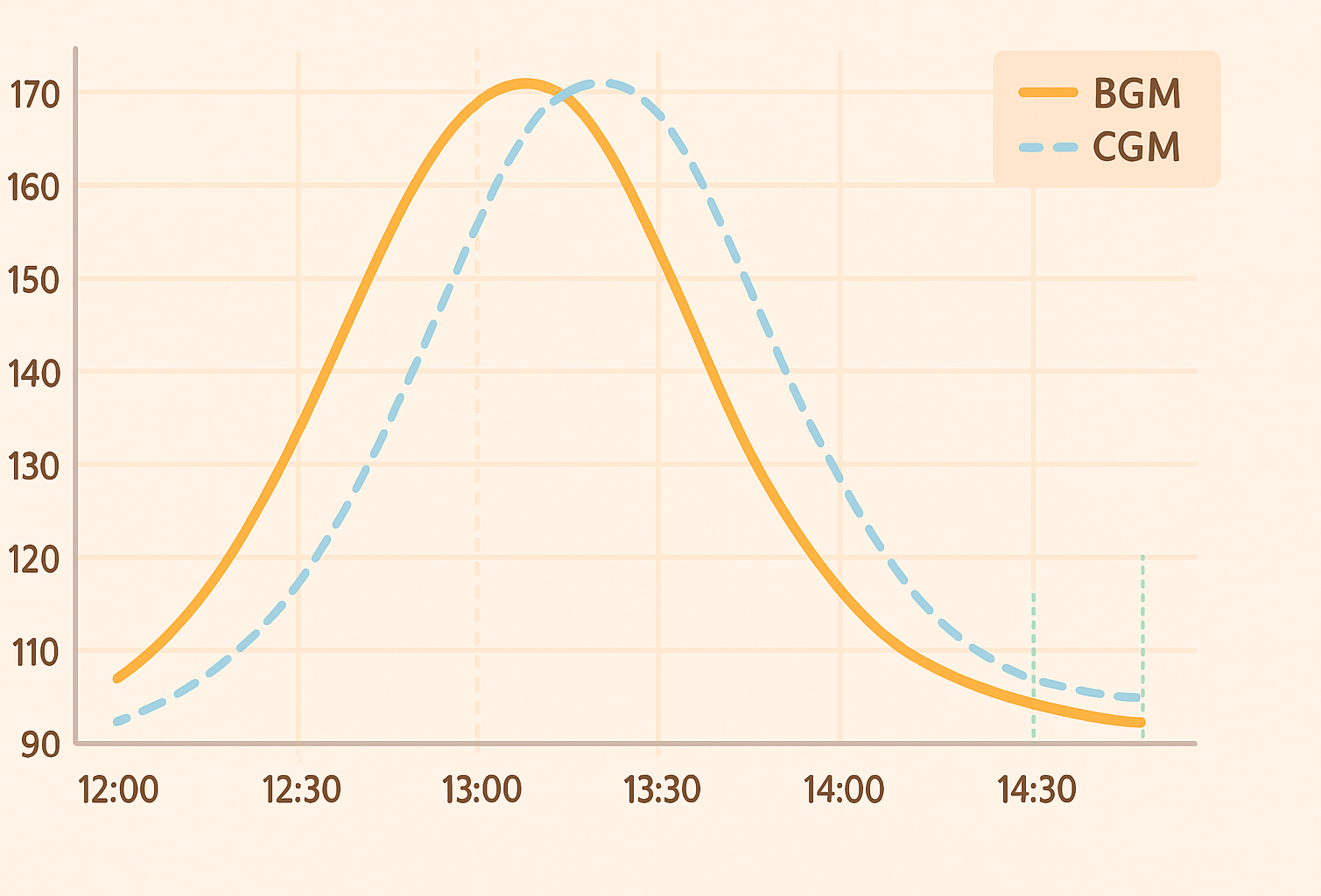
One thing to keep in mind: glucose in the fluid under your skin usually lags behind fingerstick readings by about 5–15 minutes. That’s why you may notice a difference between BGM and APP, and this difference is particularly pronounced when blood glucose rises or falls rapidly.

Why Is CGM So Helpful?
Compared with traditional finger pricks, CGM makes life with diabetes a lot easier and safer:
1. Spot hidden blood sugar swings
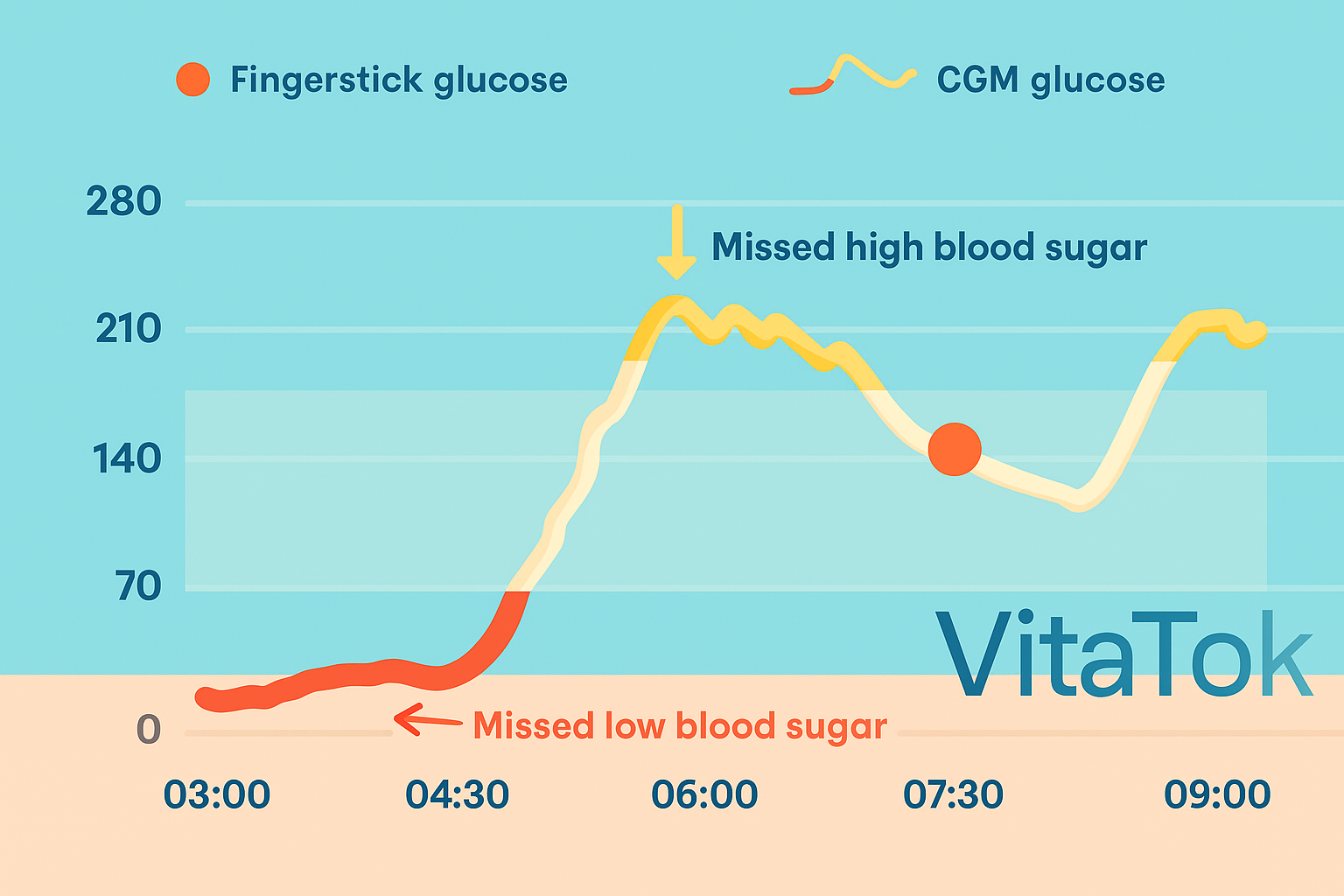
CGM can catch things fingersticks often miss, like post-meal spikes or silent overnight lows. It can even help reveal patterns such as the dawn phenomenon or the Somogyi effect.

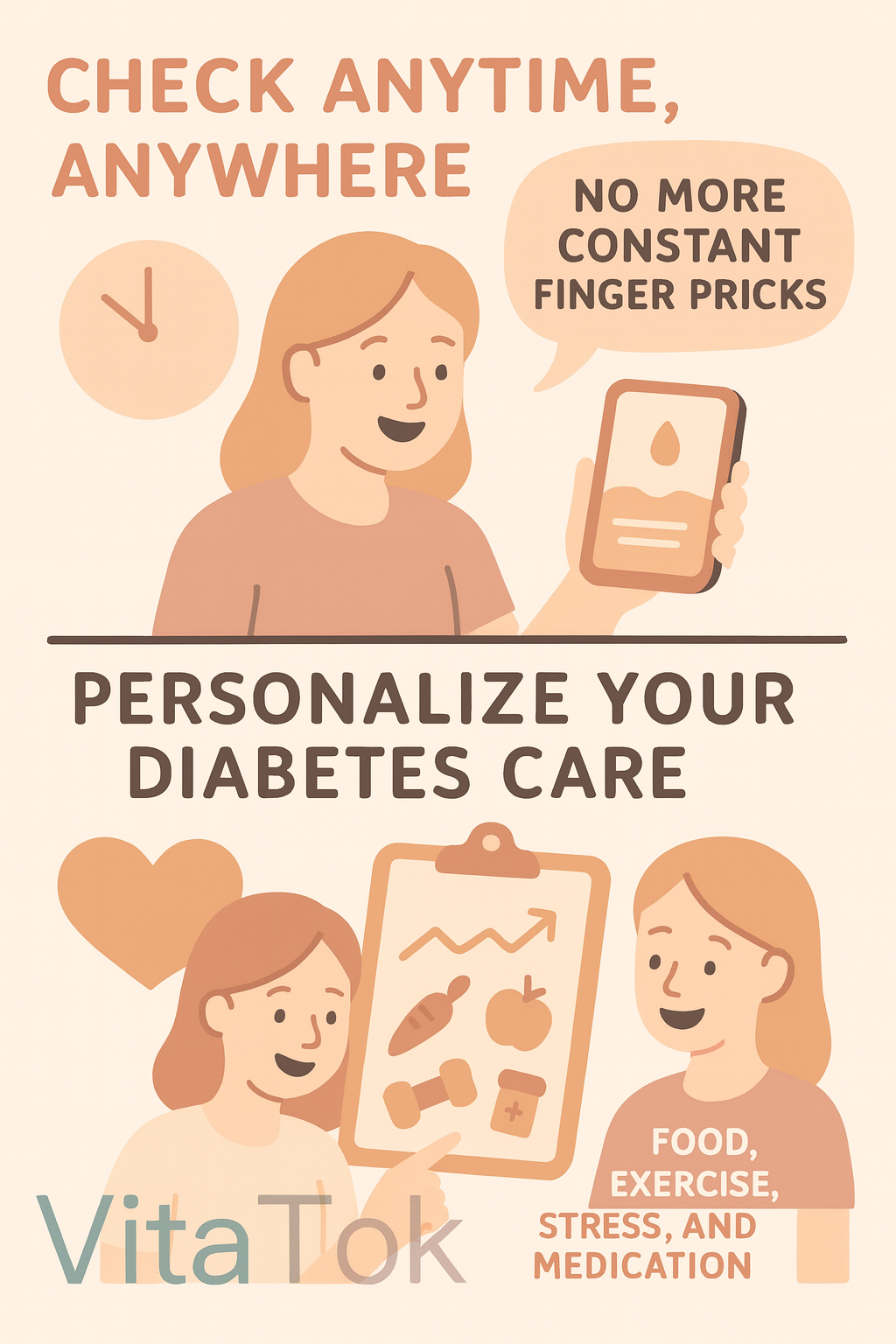
2. Check anytime, anywhere
No more constant finger pricks—just glance at your phone to see where your sugar is heading. Even better, CGM sends you alerts when your glucose is going too high or too low, so you can act right away.
3. Personalize your diabetes care
Food, exercise, stress, and medication all affect your blood sugar differently. With CGM, you can see these patterns clearly and work with your doctor to fine-tune a plan that truly fits you.

Tips for Everyday Use
To keep your CGM working smoothly, here are some simple reminders:
- Clean your skin before putting it on, but don’t scrub too hard.
- Avoid scars, cuts, or spots that rub a lot, so the sensor stays comfortable and secure.
- Make sure it’s fixed well, and try not to let clothes or belts press on it for too long.
- If you notice strong redness, swelling, or irritation, remove the sensor and talk to your doctor.


