

CGM Journey Day3——Understanding CGM Core Metrics
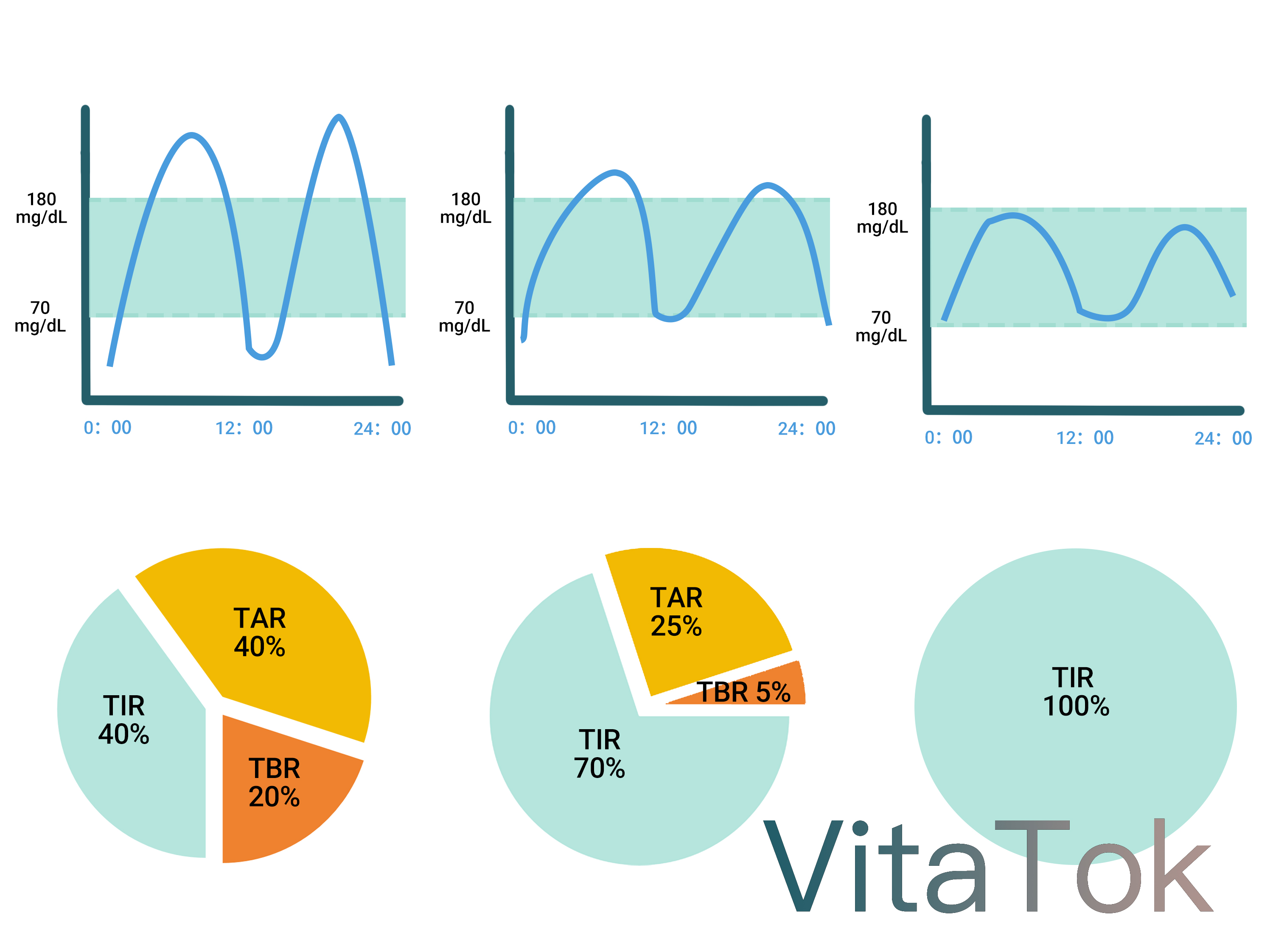
While real-time glucose readings and HbA1c levels are commonly used to assess diabetes control, they don’t tell the whole story. People with the same HbA1c of 7% can have very different glucose patterns and Time in Range (TIR) profiles. To truly understand daily glucose management, let’s learn the key metrics provided by CGM.

1. Mean Glucose
-
Definition
CGM records hundreds or even thousands of glucose readings every day. Adding them all together and dividing by the number of readings gives the “mean glucose.” -
Why it matters
It reflects the overall glucose level more directly than a single reading or HbA1c. -
Target (general recommendation)
For most adults with diabetes: Mean glucose < 153 mg/dL( 8.5 mmol/L ). -
Tip
The mean doesn’t show fluctuations, so it should always be considered together with TIR, TBR, and TAR.
2. TIR — Time in Range
-
Definition
The percentage of time your glucose stays within the target range. TIR measures the quality of glucose control. -
Target range (Adults with type 1 or type 2 diabetes)
70–180 mg/dL (3.9–10.0 mmol/L) -
Why it matters
A higher TIR means more stable glucose and a lower risk of diabetes complications. -
Example
If you spend 17 hours out of 24 in the 70–180 mg/dL range,
TIR = 17 ÷ 24 × 100% ≈ 71%, which meets the recommended goal (≥70%). -
Tip
A higher TIR means better overall glucose stability.The greater the fluctuations in blood glucose, the higher the risk of diabetes-related complications. Monitoring and managing TIR percentage can help reduce the incidence of these complications.
3. TBR — Time Below Range
-
Definition
The percentage of time your glucose falls below the target range. TBR measures the risk of hypoglycemia. - Target range(Adults with type 1 or type 2 diabetes)
- Level 1 Hypoglycemia: <3.9 mmol/L (≈<70 mg/dL)
Target: <4% of the day (~<1 hour)
- Level 2 Hypoglycemia: <3.0 mmol/L (≈<54 mg/dL)
Target: <1% of the day (~<15 minutes)
-
Why it matters
Hypoglycemia is more dangerous than hyperglycemia, especially at night when symptoms may be missed. -
Example
If your glucose is <3.9 mmol/L for 30 minutes in a day,
TBR = 0.5 ÷ 24 × 100%≈ 2%, which is within the safe target (<4%). -
Tip
Watch out for early hypoglycemia symptoms such as sweating, palpitations, or trembling—and act promptly.
4. TAR — Time Above Range
-
Definition
The percentage of time your glucose is above the target range. TAR measures the risk of hyperglycemia. - Levels (Adults with type 1 or type 2 diabetes)
- Level 1 Hyperglycemia: 10.1–13.9 mmol/L (≈182–250 mg/dL)
Target: <25% of the day (~<6 hours)
- Level 2 Hyperglycemia: ≥13.9 mmol/L (≥250 mg/dL)
Target: <5% of the day (~<1.2 hours)
-
Why it matters
Prolonged hyperglycemia is strongly linked to diabetes complications affecting the eyes, kidneys, and cardiovascular system. - Example
-
If glucose >10.1 mmol/L for 4 hours in a day,
TAR ≈ 17%, which is acceptable for level 1 hyperglycemia (<25%). -
If glucose ≥13.9 mmol/L for 30 minutes,
TAR (level 2) ≈ 2%, well within the recommended limit (<5%).
Summary
- Mean Glucose: Overall blood sugar level
- TIR: The higher, the better (≥70%)
- TBR: Keep lows to a minimum (<4%)
- TAR: Limit highs (<25%)
The Importance of Individualized Targets
These targets are not one-size-fits-all. They should be personalized depending on:
- Age: Older adults may need looser goals to reduce hypoglycemia risk.
- Complications: If severe diabetes complications are present, target ranges may differ.
- Lifestyle and risk factors: Newly diagnosed patients, those prone to hypoglycemia, or those needing nighttime safety may have different goals.
Takeaway
Glucose management should be personalized.
Always consult your healthcare provider to set the targets that best suit your health status and daily life.
Your doctor can help you interpret CGM data and adjust your treatment plan accordingly.


