

CGM Journey Day10——Can Poor Sleep Really Raise Your Blood Sugar?
Many people with diabetes have noticed something like this:
“I didn’t eat much last night, but my fasting blood sugar was higher this morning.”
“After just one bad night’s sleep, my blood sugar shot up!”
This isn’t your imagination.
Poor sleep really can raise blood sugar and even weaken the effect of insulin.
🌙 1. The Hidden Link Between Sleep and Blood Sugar
Sleep is like your body’s nighttime repair program.
During good sleep, your brain, hormones, and metabolism quietly restore balance.
But when you don’t sleep enough, that balance is disrupted.
Research shows that:
- Sleeping less than 6 hours a night can raise fasting blood sugar.
- After several nights of poor sleep, your body’s insulin sensitivity can drop by 20–30%.
In other words, when you sleep poorly, your “insulin keys” don’t work as well —
so glucose stays in the blood instead of entering cells, causing higher sugar levels.
🔁 2. Why Does Poor Sleep Raise Blood Sugar?
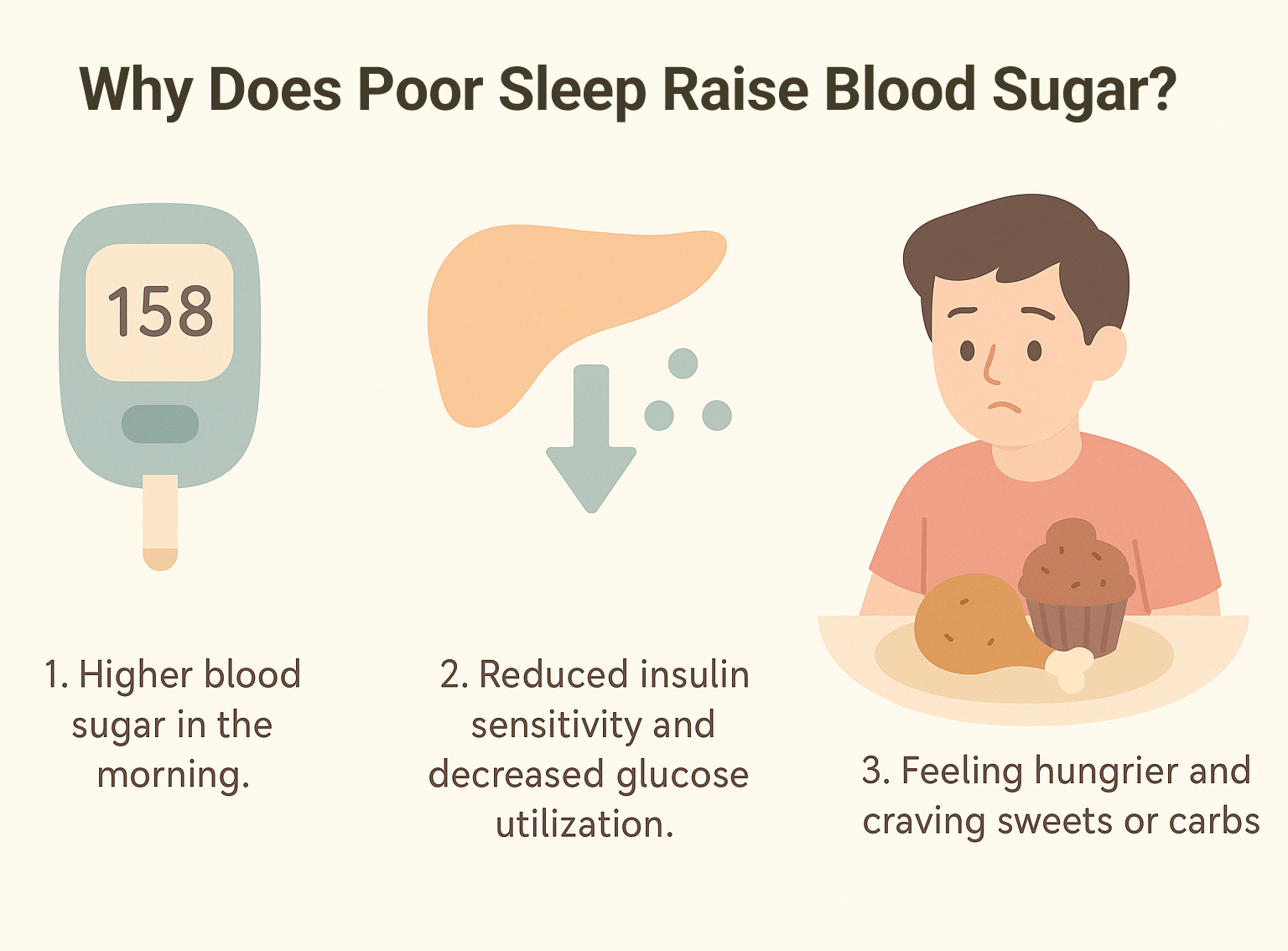

1️⃣ Stress hormones surge
Lack of sleep triggers more cortisol and adrenaline.
These hormones tell your liver to release glucose to “keep you alert.”
Result: higher blood sugar in the morning.
2️⃣ Reduced insulin sensitivity
When you don’t sleep enough, your muscles and fat cells become “lazy,”
responding less to insulin — meaning glucose isn’t used efficiently.
3️⃣ Appetite hormones go off balance
Poor sleep raises ghrelin (the hunger hormone) and lowers leptin (the satiety hormone).
The outcome: you feel hungrier and crave sweets or carbs.
Over time, this leads to weight gain and worsening glucose control.
😴 3. How Different Sleep Problems Affect Blood Sugar
|
Sleep Problem |
Blood Sugar Impact |
Explanation |
|
Too little sleep (<6h) |
↑ Fasting glucose, ↑ Insulin resistance |
Most common issue |
|
Oversleeping (>9h) |
↑ Insulin resistance |
Linked to metabolic syndrome |
|
Light sleep / frequent waking |
↑ Nighttime glucose, ↑ Cortisol |
High morning glucose |
|
Sleep apnea |
↑ HbA1c, ↑ Glucose variability |
Repeated oxygen drops disrupt control |
|
Staying up late / shift work |
↑ Insulin resistance |
Disrupts circadian rhythm and metabolism |
💉 4. Why Sleep Matters Even More for People With Diabetes
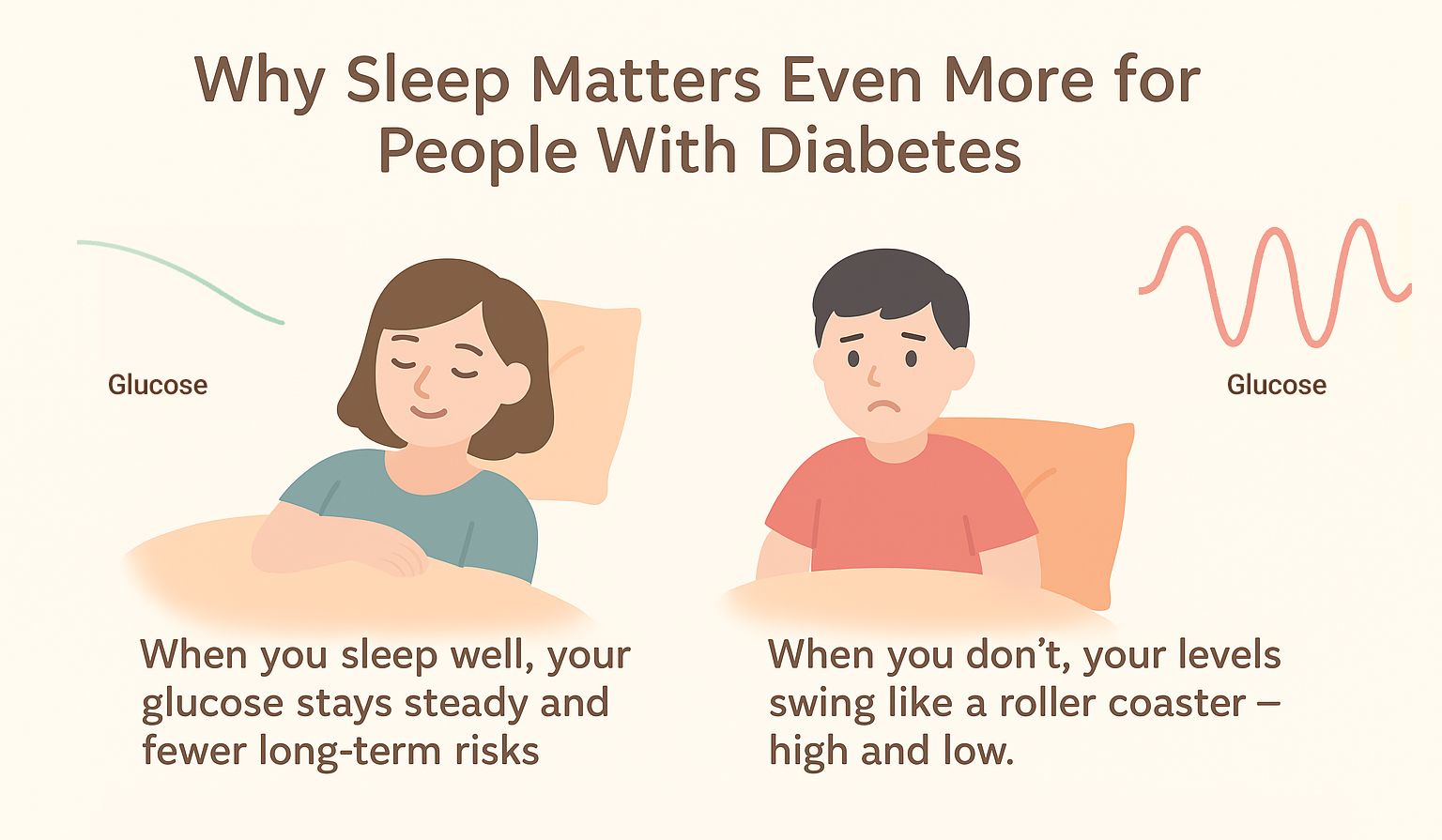

For people with diabetes, sleep is like a natural blood sugar stabilizer.
When you sleep well, your glucose stays steady.
When you don’t, your levels swing like a roller coaster — high and low.
Poor sleep doesn’t just cause morning highs (the “dawn phenomenon”);
it also raises HbA1c, reduces medication effectiveness,
and increases the risk of complications.
Studies show that people who sleep well have smoother glucose curves and fewer long-term risks.
🌿 5. Want Steadier Blood Sugar? Start With Better Sleep!
|
Improvement Strategy |
How It Helps |
Tips |
|
Keep a regular schedule |
Stabilizes circadian rhythm |
Go to bed and wake up at the same time daily |
|
Sleep 7–8 hours per night |
Optimal for metabolism |
Avoid too short or too long sleep |
|
Relax before bed |
Lowers stress hormones |
Try calm music or deep breathing |
|
Avoid late-night eating |
Prevents overnight glucose rise |
No snacks within 2–3 hours of bedtime |
|
Skip caffeine and screens |
Supports melatonin release |
Avoid tea, coffee, or phone use before bed |
|
Check for sleep apnea |
Prevents nighttime oxygen dips |
Seek medical help if you snore or stop breathing during sleep |
✳️ 6. In Summary
Sleep and blood sugar are like two sides of a scale:
the better you sleep, the steadier your glucose.


