

CGM Journey Day13——Simple Dietary Tips for More Stable Blood Sugar
In diabetes management, a balanced diet is key to controlling blood sugar. Here are some easy and practical dietary tips to help keep your blood glucose levels steady.
1️⃣ Meal Order
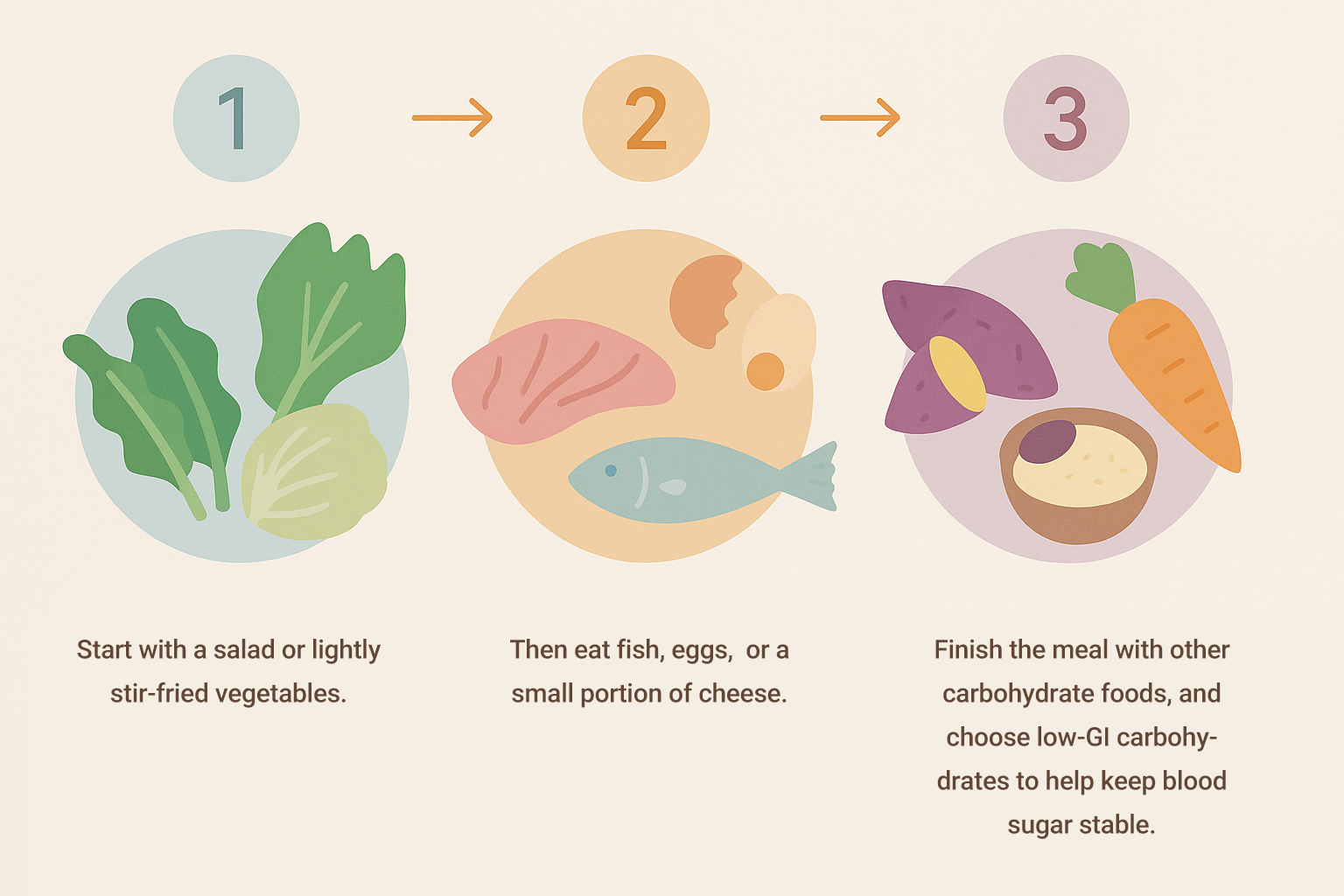

Eating vegetables and protein before carbohydrates can significantly reduce post-meal blood sugar spikes.
How it works:
The fiber in vegetables and the protein in foods slow down carbohydrate absorption, resulting in a gentler rise in blood sugar.
Tips:
- Start with a salad or lightly stir-fried vegetables.
- Then eat fish, eggs, or a small portion of cheese.
- Finish the meal with other carbohydrate foods, and choose low-GI carbohydrates to help keep blood sugar stable.
2️⃣ Small Frequent Meals vs. Large Single Meals (Portion Control)
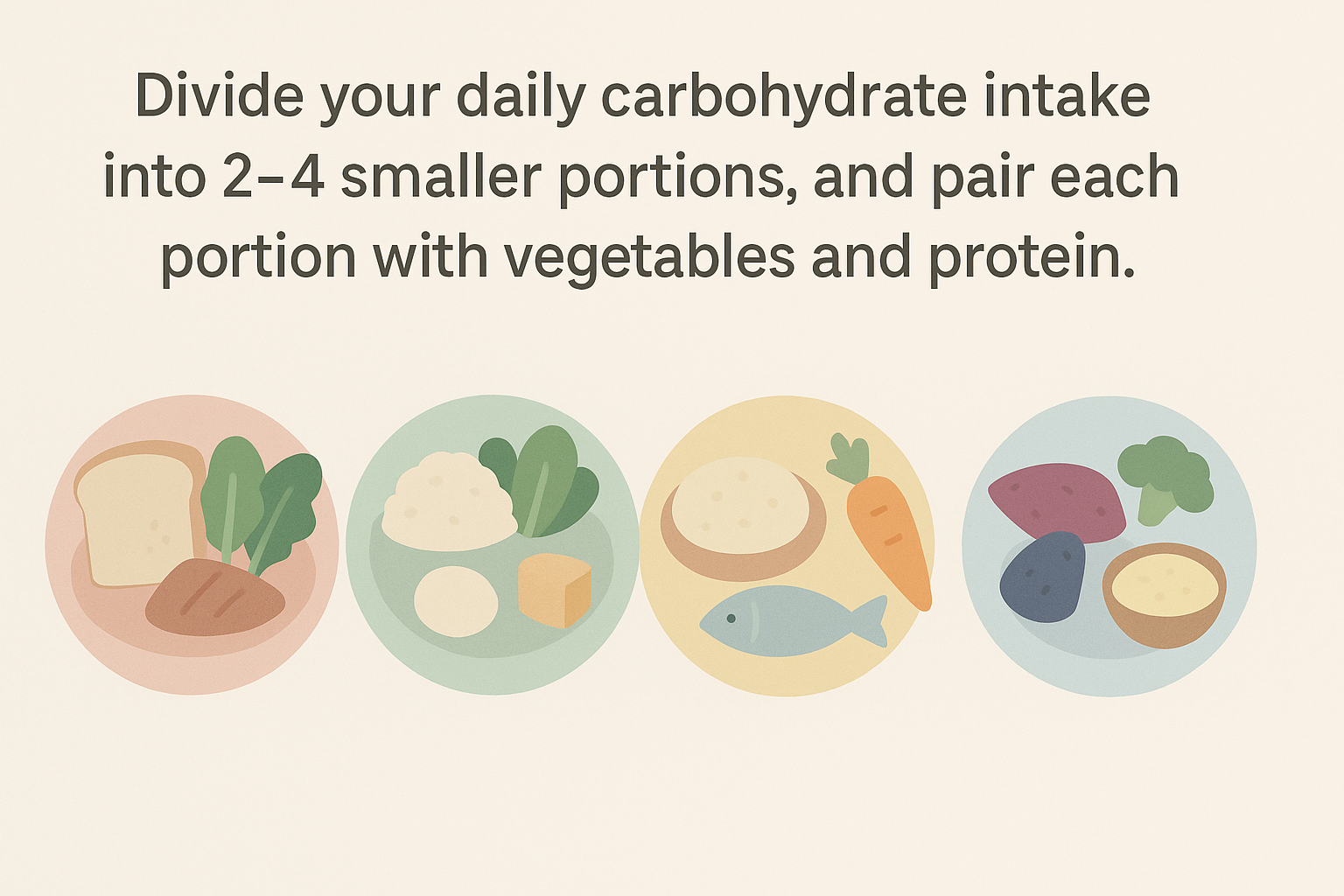

Eating a large amount of carbohydrates at once versus splitting them into smaller meals can have a noticeable impact on blood sugar.
How to do it:
- Divide your daily carbohydrate intake into 2–4 smaller portions, and pair each portion with vegetables and protein.
- Avoid consuming large amounts of rice, noodles, or desserts in a single sitting.
Tip:
Use a Continuous Glucose Monitor (CGM) to experiment and see which method works best for you.
3️⃣ 2-1-1 Plate Method
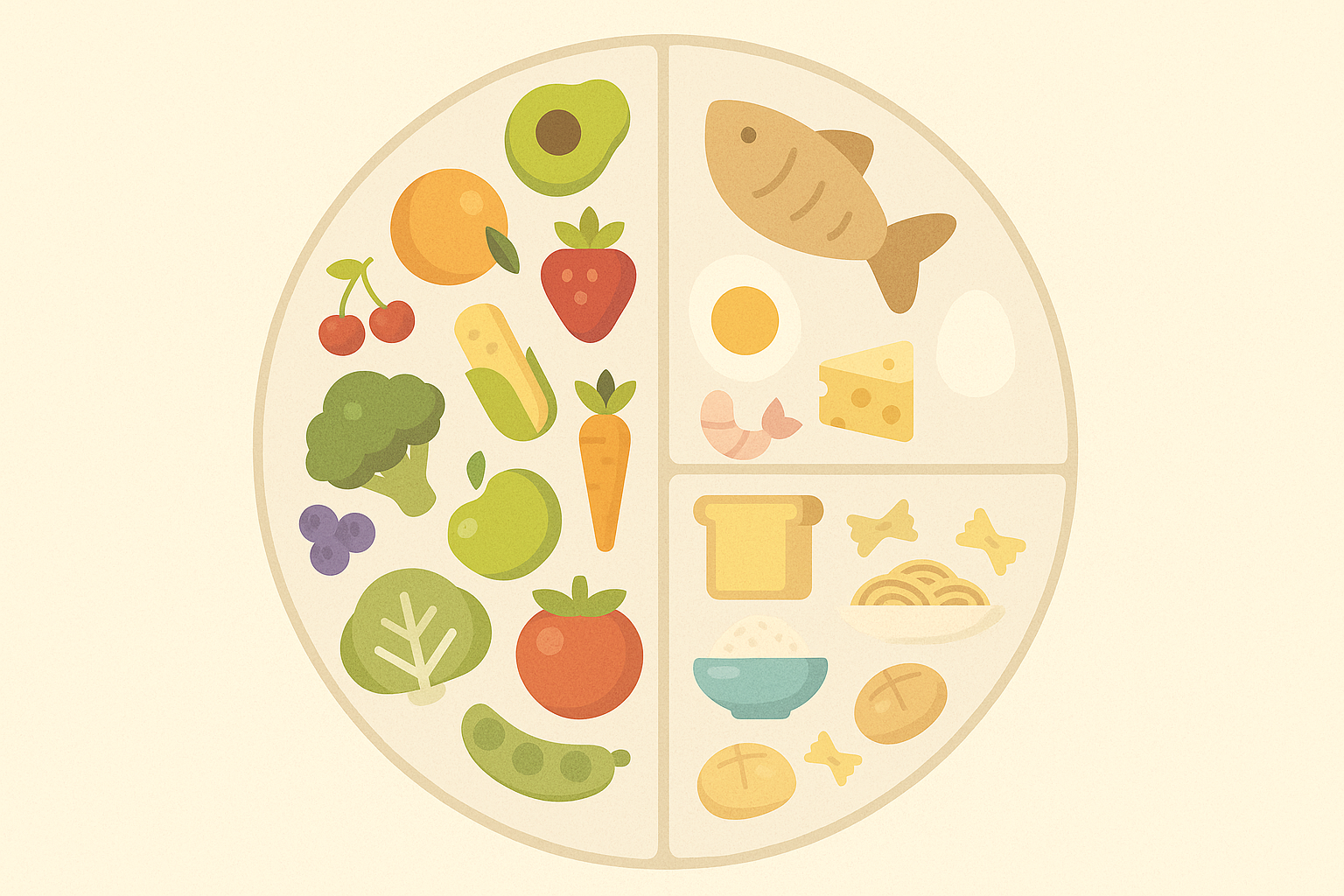

The 2-1-1 plate method is a simple and practical tool for diabetes-friendly meals. By following a 2-1-1 ratio, it helps increase dietary fiber while balancing protein and carbohydrates for a more balanced diet.
Suitable for:
- Diabetes prevention
- Prediabetes
- Blood sugar management for diagnosed diabetes
2-1-1 Plate Ratio:
|
Portion |
Food |
Function & Tips |
|
2 parts vegetables (½ of the plate) |
Leafy greens, mushrooms, gourds, etc. |
High in dietary fiber, helps slow blood sugar rise |
|
1 part protein (¼ of the plate) |
Fish, tofu, eggs, etc. |
Increases satiety; choose high-quality proteins low in saturated fat |
|
1 part whole grains (¼ of the plate) |
Brown rice, oats, quinoa, and other low-GI starches |
Rich in fiber and minerals; a better alternative to refined carbs |
Benefits:
- Stabilizes post-meal blood sugar
- Simple to follow without strict calorie counting
- Suitable for long-term daily practice
💡 Summary:
- Eat in order, have small frequent meals, and take a post-meal walk → helps reduce blood sugar fluctuations
- Use the 2-1-1 plate method → balances fiber, protein, and carbohydrates, making blood sugar control easier


