

CGM Journey Day2——Why Readings Can Be “Inaccurate” and When to Calibrate
Why Readings Can Be Inaccurate
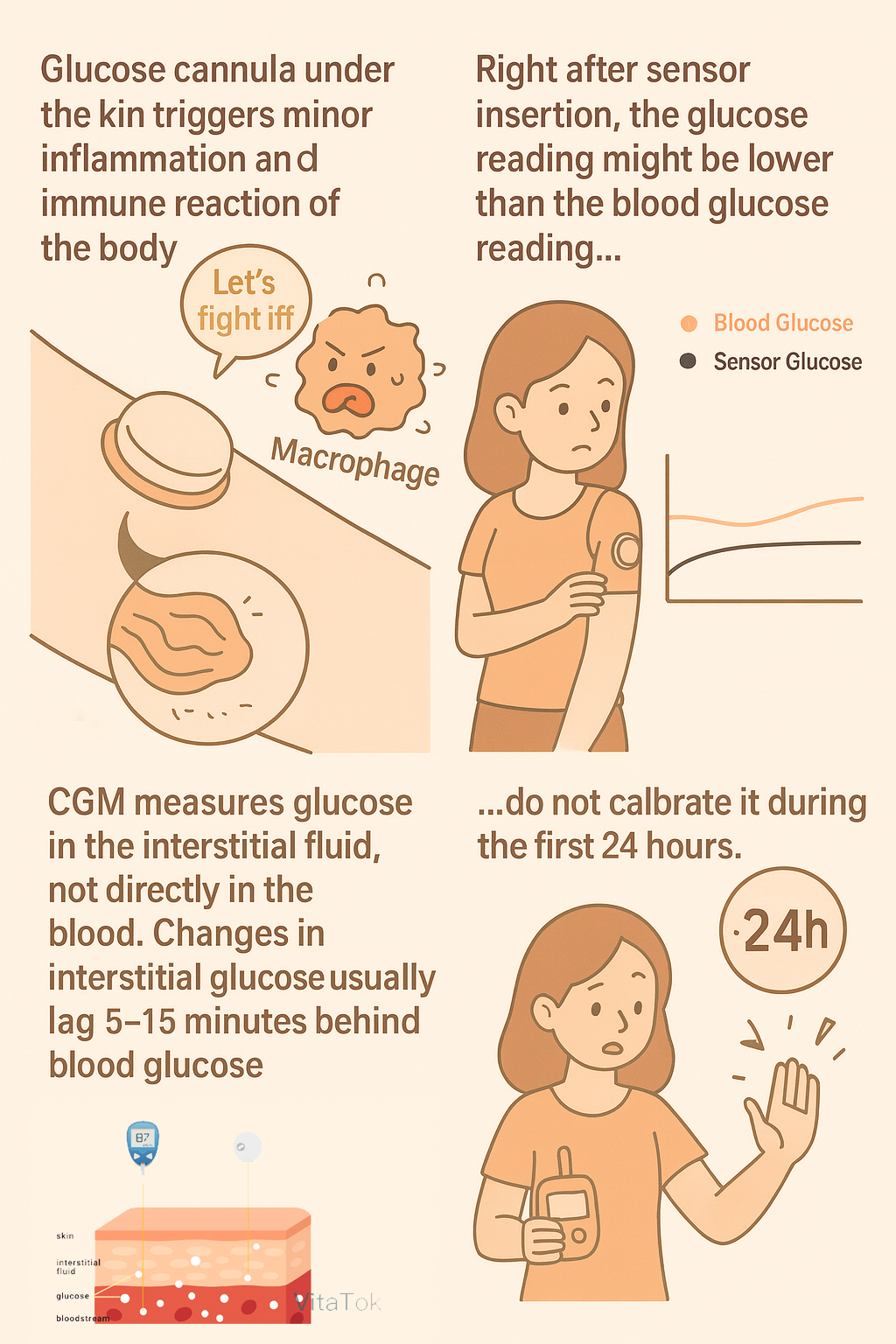
During the first 24 hours after applying a CGM sensor, glucose readings may deviate from your fingerstick blood glucose (BGM). This is perfectly normal.
The main reasons are:
-
Immune response of the body
When the sensor is inserted, the body reacts with a mild immune response. The surrounding tissue needs time to “get used to” the sensor, which can make the readings less stable during the first 24 hours. -
Time lag between interstitial fluid and blood
CGM measures glucose in the interstitial fluid, not directly in the blood. Changes in interstitial glucose usually lag 5–15 minutes behind blood glucose. This gap becomes more noticeable during rapid glucose fluctuations.
So, don’t be alarmed if your CGM seems less accurate on the first day — it’s part of the normal adjustment period.


Other Influencing Factors
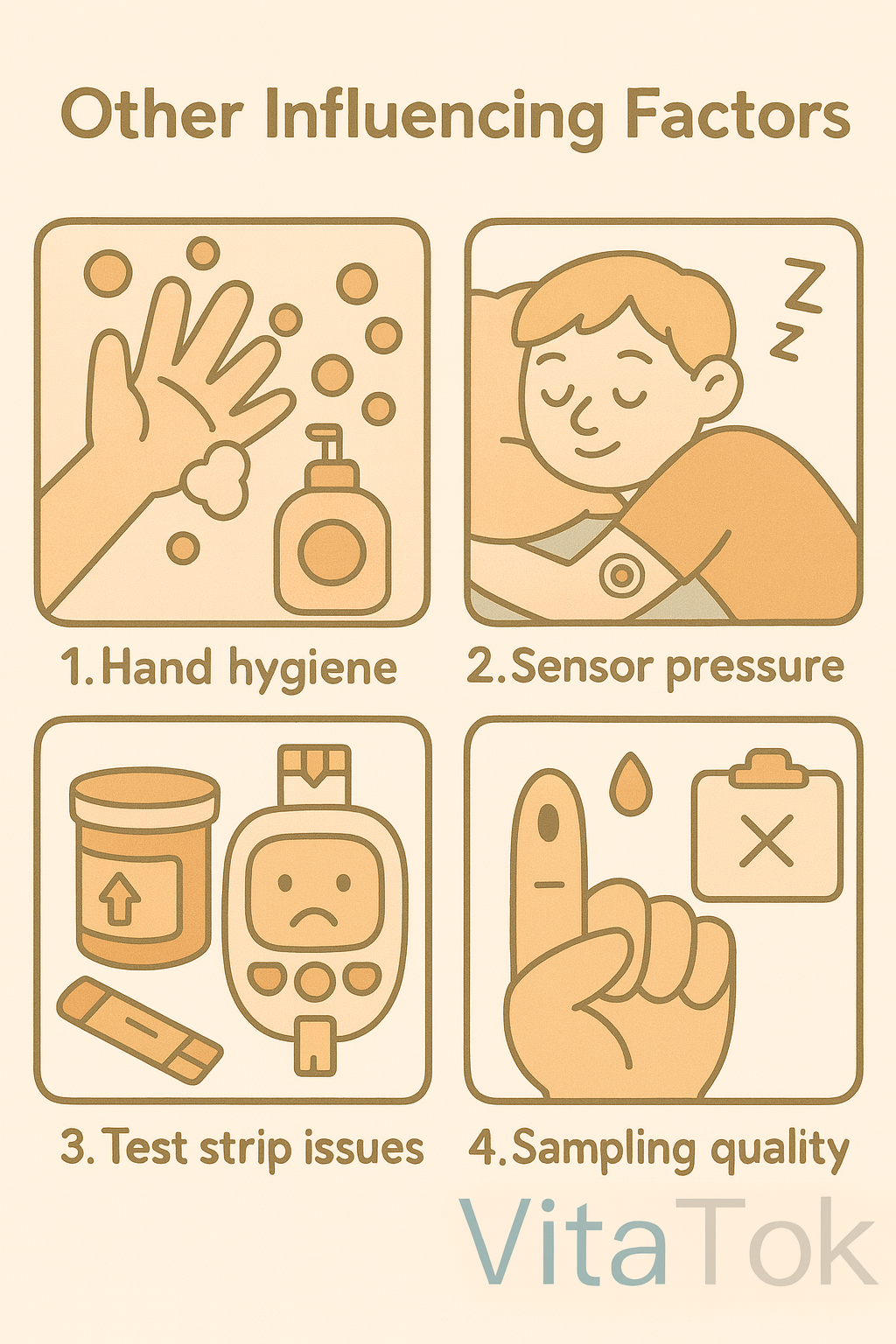
Apart from the initial adjustment phase, several external factors can also affect the accuracy of CGM or BGM:
-
Hand hygiene
If your fingers have oil, sugar, or food residue when testing, BGM results may appear falsely high or low.
Correct practice: Wash hands with soap and water, then dry thoroughly before testing. -
Sensor pressure
Pressure on the sensor (for example,pressing the sensor while sleeping) can lead to “false low” readings. Once the pressure is removed, readings usually return to normal. -
Test strip issues
Expired or improperly stored BGM strips (e.g., moisture, incorrect temperature) can cause inaccurate results. -
Sampling quality
An insufficient blood sample or poor technique may produce abnormal BGM values, which in turn can affect calibration.

When to Calibrate
Always prioritize your own physical sensations.
If your body feels very different from what the CGM app shows, check with a fingerstick test and use the calibration function if needed.
-
Normal difference range
A discrepancy of up to ±20 mg/dL (≈ 1.1 mmol/L) between CGM and BGM is considered normal. -
When calibration is needed
If the gap is larger and persists, check the sensor status and calibrate.
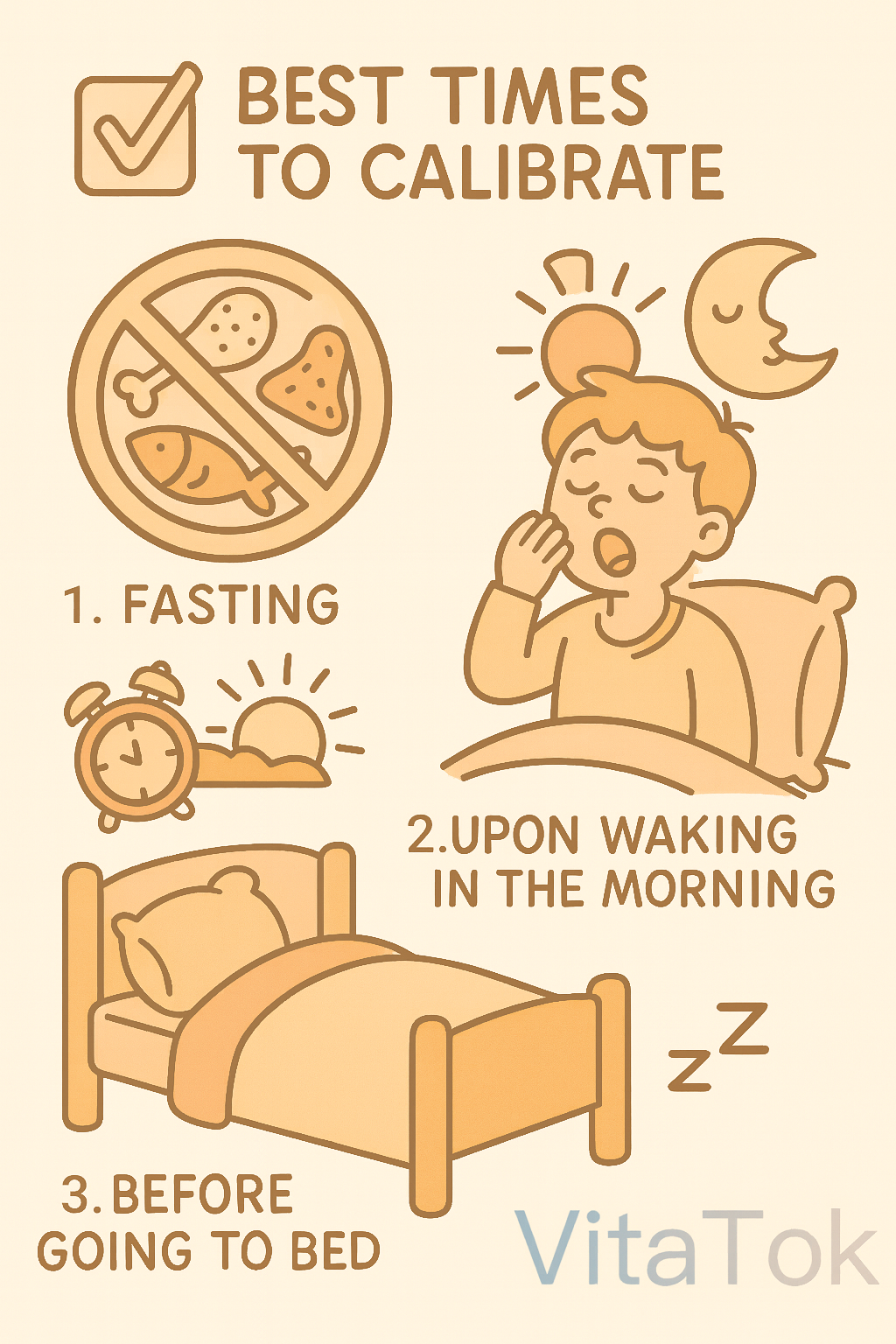
✅ Best times to calibrate
Calibration works best when glucose levels are relatively stable, such as:
- Fasting
- Upon waking in the morning
- Before going to bed

❌ Times to avoid calibration
Avoid calibrating when glucose levels are changing rapidly, as this can “mislead” the CGM algorithm and increase errors. Do not calibrate:
- Within 1 hour after a meal
- Right after exercise
- Immediately after insulin injection


