

CGM Journey Day6——Understanding Glycemic Index (GI) and Glycemic Load (GL)
Have you ever wondered why some foods that don’t taste very sweet can still spike your blood sugar? Or why some fruits, despite being high in sugar, don’t cause rapid blood sugar rises? The answer lies in Glycemic Index (GI) and Glycemic Load (GL).
1. What is Glycemic Index (GI)?
The Glycemic Index (GI) measures how quickly carbohydrate-containing foods raise blood sugar within 2 hours after eating.
In simple terms: carbohydrates in food are broken down into glucose in the digestive tract and enter the bloodstream. Different foods digest at different rates, causing variations in blood sugar response.
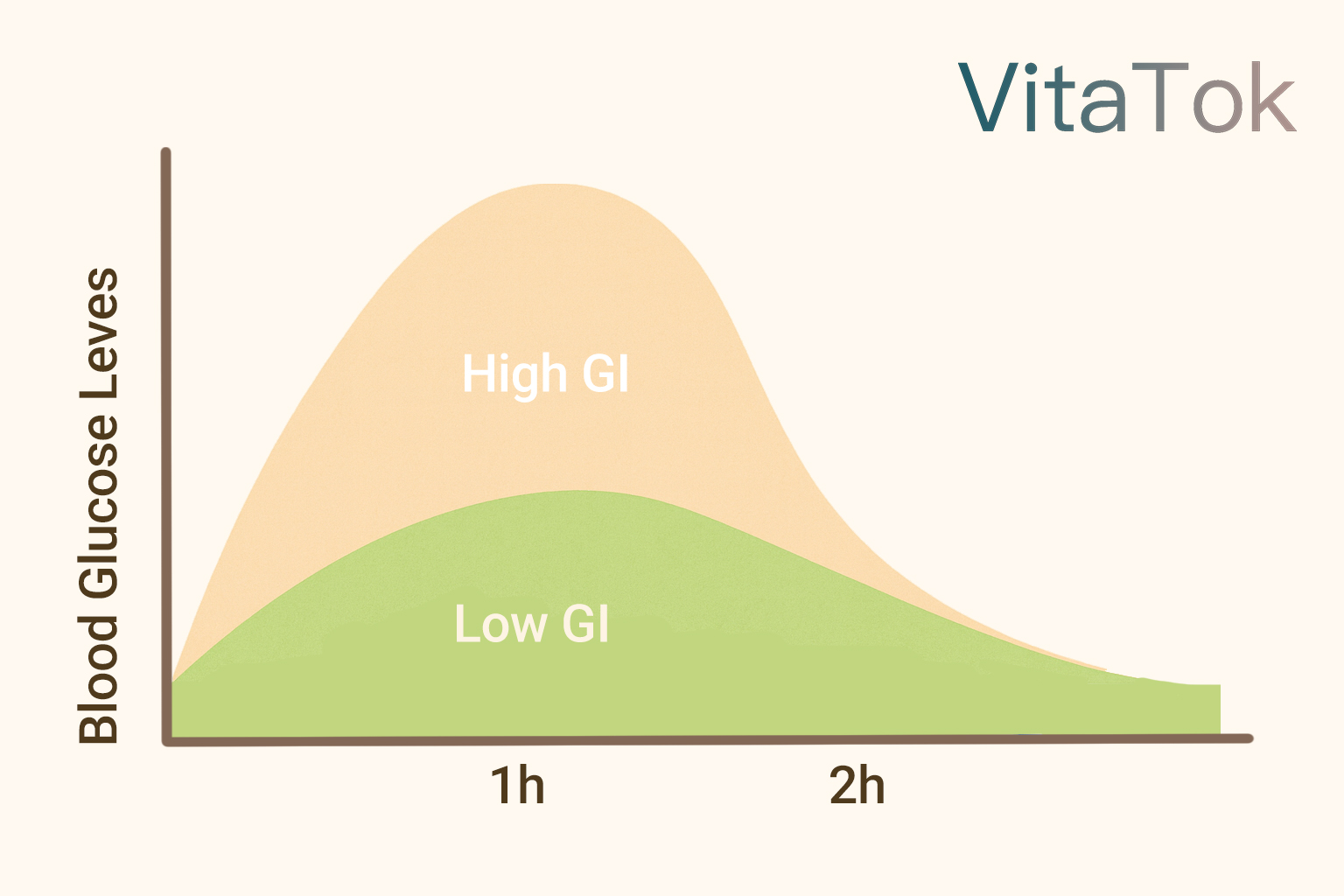

GI Classification:
- Low GI: ≤55
- Medium GI: 56–69
- High GI: ≥70
⚠️ Note: GI reflects only the speed of blood sugar rise, not the amount of food consumed.
2. What is Glycemic Load (GL)?
Glycemic Load (GL) is a more practical measure of a food’s impact on blood sugar. It takes into account both the amount of carbohydrates and the GI of the food.
GL = (Carbohydrate content in grams × GI) / 100
GL Classification:
- Low GL: ≤10
- Medium GL: 11–19
- High GL: ≥20
💡 Tip: Even high-GI foods may have a low GL if eaten in small amounts, and vice versa.
3. Factors Affecting GI
- Type of Carbohydrate
- Amylose (linear): long chains, slow digestion → Low GI
- Amylopectin (branched): quickly digestible, sticky → High GI (e.g., glutinous rice)
- Dietary Fiber
- Soluble fiber: viscous, slows glucose absorption → Low GI (oats, legumes)
- Insoluble fiber: blocks digestive enzymes → Low GI (vegetables, whole grains)
- Protein Content
- Protein slows gastric emptying → Low GI
- Example: milk, cheese, pasta vs. regular noodles
- Fat Content
- Fat slows digestion → Low GI
- Note: excessive fat may increase the risk of overweight and cardiovascular disease
- Acidity
- Foods with higher acidity usually have a lower GI
- Cooking and Processing
- Longer cooking time → higher GI
- Smaller particle size → higher GI
- Example: rice cooked 1 min GI=46, cooked 6 min GI=87
- Ripeness
- Riper foods → higher GI
- Example: green banana GI=30, ripe banana GI=52
4. Practical Tips for a Low-GI Diet
1. Prioritize Low-GI Foods
- Low-fat or skim milk, cheese
- Legumes, whole grains, fibrous vegetables
2. Smart Food Pairing
High-GI foods can be balanced to reduce blood sugar spikes:
- Add high-fiber vegetables
- Use whole grains (black rice, red rice, whole wheat)
- Pair with legumes, moderate amounts of meat, eggs, or fish
- Include healthy fats or a small portion of nuts (watch the total amount)
3. Everyday Tips
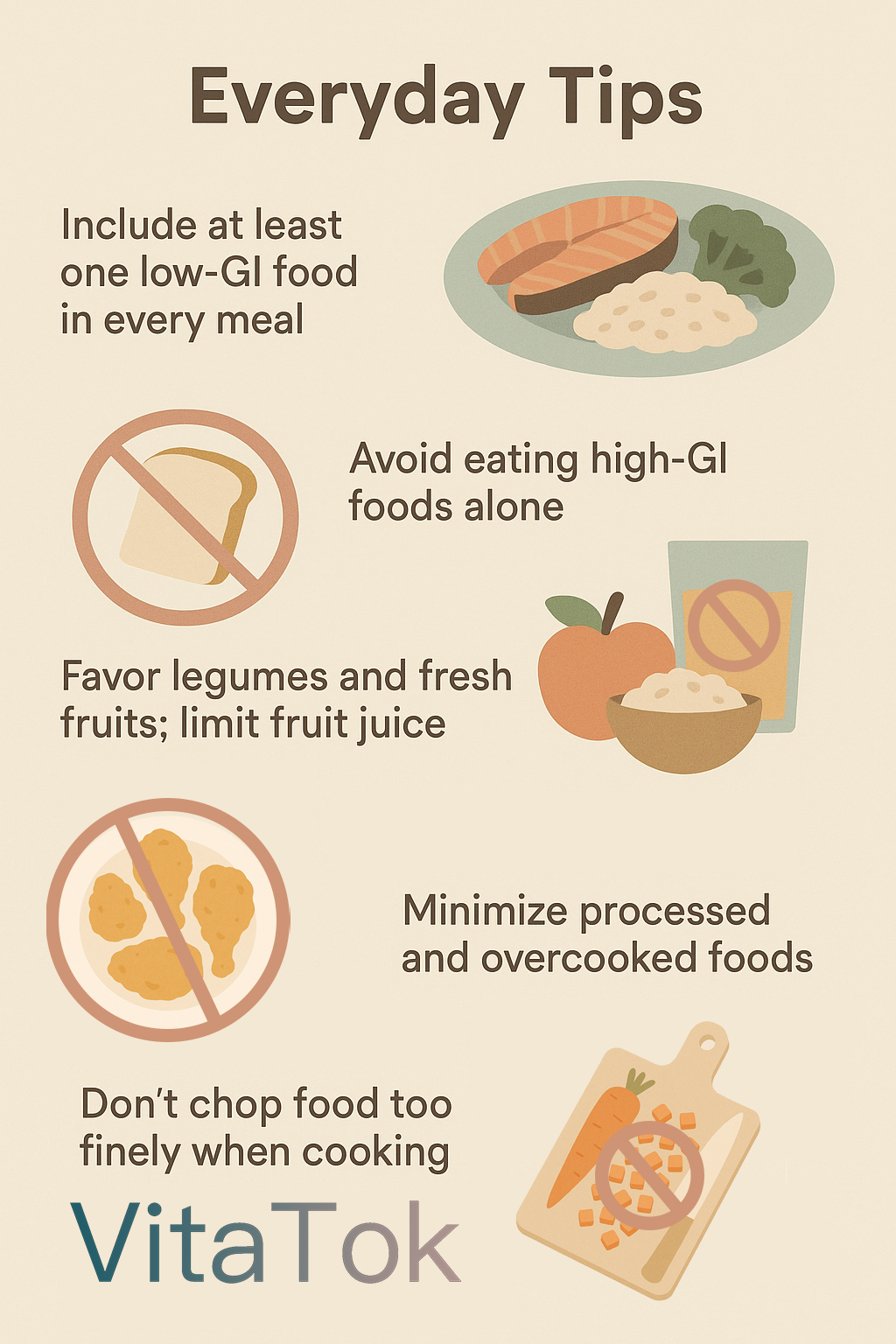
- Include at least one low-GI food in every meal
- Avoid eating high-GI foods alone
- Favor legumes and fresh fruits; limit fruit juice
- Minimize processed and overcooked foods
- Don’t chop food too finely when cooking
⚠️ Reminder: Low GI does not mean unlimited consumption; high-fat, low-GI foods still require portion control.

📌 Summary
Understanding GI and GL helps you make smarter food choices. With proper food pairing, you can maintain stable blood sugar without extreme dieting. Next time you cook or shop, check the GI and GL of your foods, and make blood-sugar-friendly choices!
Glycemic Index (GI) Classification Table of Common Foods


