

CGM Journey Day15——How CGM Empowers Type 2 Diabetes Reversal
1. What is Diabetes Reversal
When people hear "diabetes reversal," they often wonder, "Does this mean a complete cure?" In fact, diabetes reversal ≠ cure.
Diabetes reversal refers to restoring blood glucose to normal levels through lifestyle interventions—such as diet and exercise—without relying on glucose-lowering medications, while still requiring regular blood glucose monitoring. In other words, if diet is uncontrolled or weight management is neglected, blood sugar can rise again.
In 2021, the American Diabetes Association (ADA) published the Consensus Report on the Definition and Explanation of Type 2 Diabetes Remission, proposing the diagnostic criteria for remission (reversal): discontinuation of glucose-lowering drugs for at least 3 months with HbA1c <6.5%.
2. Who is More Likely to Achieve Diabetes Reversal?
Not all patients with type 2 diabetes can easily achieve reversal. Research shows that patients who meet the following ABCD criteria have a higher chance of success:
-
A: Antibodies
Negative for glutamic acid decarboxylase antibodies (GADA) and other islet-related antibodies. Positive patients are often type 1 diabetes or LADA, and lifestyle interventions alone are unlikely to fully reverse their condition. -
B: Body Mass Index (BMI)
BMI ≥ 25 kg/m² (or waist circumference >90 cm for men, >85 cm for women), indicating insulin resistance that can potentially be improved through weight loss. -
C: C-Peptide Levels (β-cell function)
Fasting C-peptide ≥ 1.1 ng/ml and 2-hour postprandial C-peptide ≥ 2.5 ng/ml suggest preserved β-cell function, providing a foundation for reversal. This also requires an assessment of complications to ensure the patient is suitable for diet and exercise interventions. -
D: Duration of Diabetes
Clinical evidence shows that patients with a disease duration ≤ 5 years have a higher likelihood of remission. Longer disease duration usually means more severe β-cell damage, making reversal more difficult.
In short, patients with a shorter disease duration, preserved β-cell function, manageable weight, and no relevant antibodies are the highest potential candidates for type 2 diabetes reversal.
3. How to Achieve Diabetes Reversal
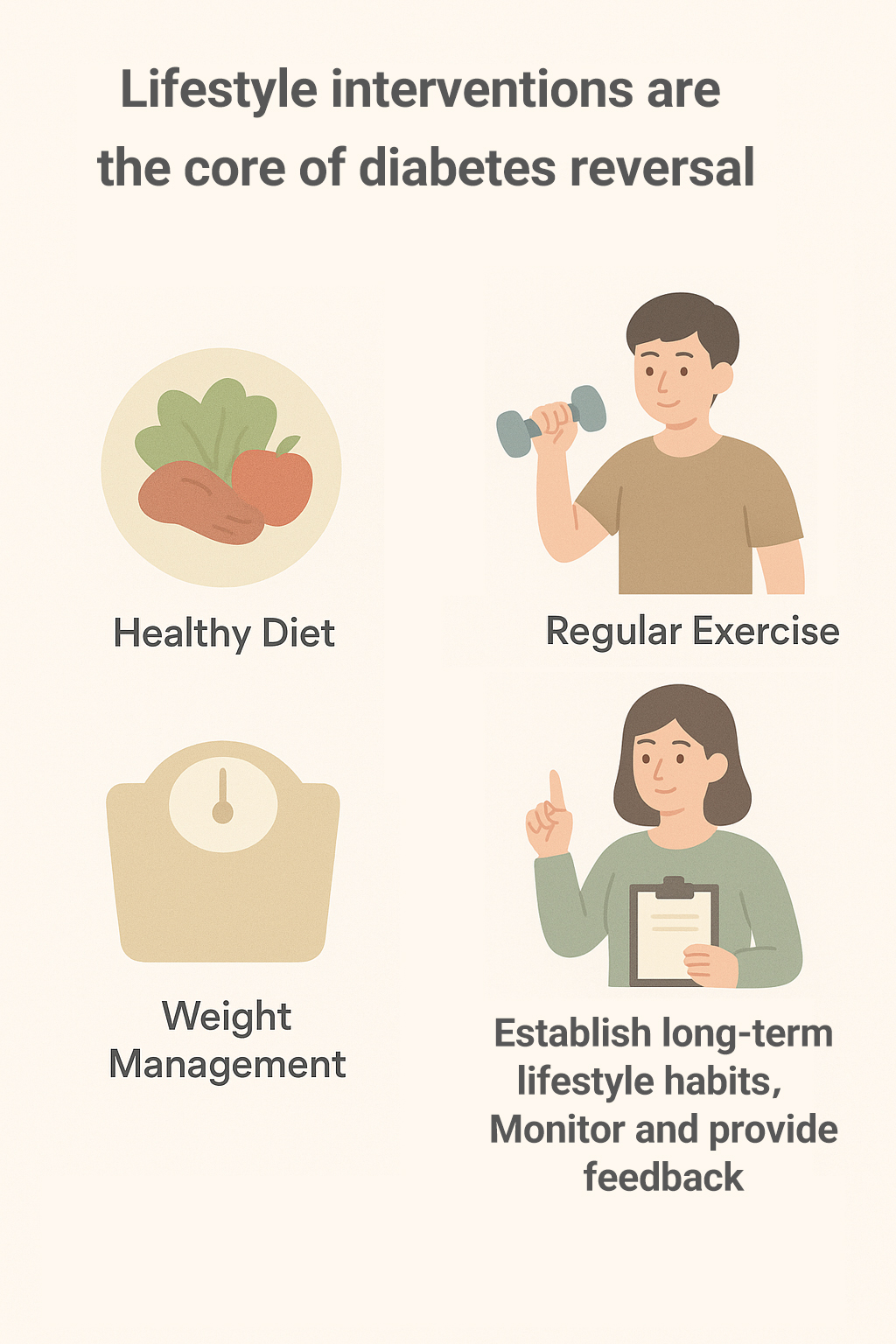

Lifestyle interventions are the core of diabetes reversal, including:
- Healthy Diet
- Control total carbohydrate intake and meal sequence
- Increase high-quality protein and dietary fiber
- Avoid foods high in sugar and fat
- Regular Exercise
- At least 150 minutes of moderate-intensity aerobic exercise per week
- Combine with resistance training to improve glucose utilization by muscles
- Weight Management
- For overweight or obese patients, a 5–10% weight loss can significantly improve blood glucose
- Behavioral and Psychological Support
- Establish long-term lifestyle habits
- Monitor and provide feedback to prevent relapse
4. The Key Role of CGM in Diabetes Reversal
Continuous Glucose Monitoring (CGM) is an indispensable tool in diabetes reversal. Its benefits include:
-
Dynamic Blood Glucose Monitoring
CGM records blood glucose fluctuations throughout the day and night, rather than just fasting or postprandial levels. -
Detecting Hidden Glucose Abnormalities
Some patients may have normal fasting glucose but elevated post-meal or nighttime glucose. CGM can detect these hidden issues early. -
Guiding Personalized Interventions
CGM data allows doctors and patients to customize diet and exercise plans, accelerating the return to normal glucose levels. -
Improving Patient Adherence
Real-time feedback shows patients the results of their efforts, enhancing motivation and adherence to lifestyle interventions. -
Predicting Risk and Preventing Relapse
CGM can identify high-risk periods for blood glucose fluctuations, enabling early action to reduce the likelihood of relapse.
In short, CGM is not just a monitoring tool but a navigation system for reversal strategies, helping doctors and patients implement dynamic, practical, and effective interventions.
Summary
Diabetes reversal is achievable but requires long-term commitment. It depends on a healthy diet, regular exercise, weight management, and continuous blood glucose monitoring. Type 2 diabetes patients who meet the ABCD criteria can achieve more precise and efficient blood glucose normalization with the support of CGM.
Remember: reversal is not the end, but a new beginning for ongoing diabetes management.


